
Master's in Sanitary Engineering
Podijeli sa:
Content and Qualifications
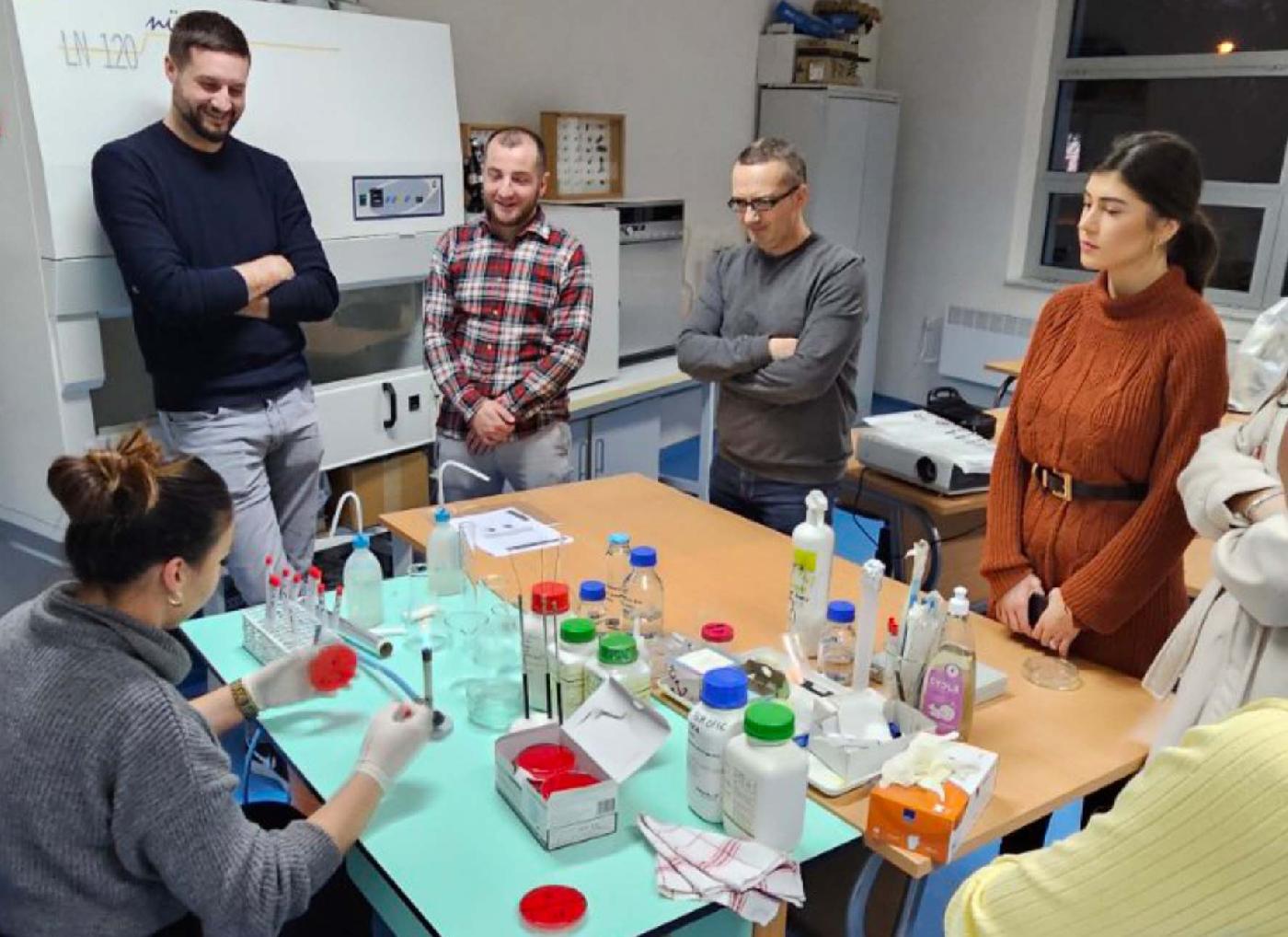
The Master’s study program in Sanitary Engineering represents the second cycle of higher education focused on deepening knowledge and developing advanced skills in the fields of environmental protection, public health, hygiene, and control of risk factors affecting human health and ecosystems. Its curriculum is carefully structured to address contemporary challenges in sanitary-ecological safety, sustainable development, and preventive health protection. The core areas of study include water, air, and soil protection, waste management, food and facility hygiene, infectious disease control, toxicology, microbiology, and analytical testing methods, as well as relevant legislative frameworks and standards. By introducing advanced topics such as biotechnology in environmental protection, modern disinfection methods, and digital technologies in public health control, the program adapts to the needs of the 21st century. The master’s curriculum enables students to develop the ability to independently solve complex health protection problems through an interdisciplinary approach. Combining knowledge from biology, chemistry, engineering, medicine, and environmental sciences, the program prepares professionals to make scientifically grounded and socially responsible decisions. A particular emphasis is placed on the practical component of the program—laboratory work, field studies, professional internships, and the master’s thesis—which allows students to apply acquired knowledge directly and gain competencies in analyzing, monitoring, and improving hygienic and sanitary conditions across various sectors: healthcare, food industry, water supply and sewage systems, municipal services, education, tourism, and more. In today’s society, facing challenges such as climate change, urbanization, pandemics, and environmental pollution, sanitary engineering experts play a key role in preserving the health of populations and ecosystems. This master’s program equips them with the necessary tools to identify, analyze, and manage health risks at local, regional, and global levels.
Expected Competencies
Upon completion of the master’s program in Sanitary Engineering, graduates acquire a broad spectrum of advanced competencies enabling them to function as highly qualified experts in public health protection and environmental safety. These competencies go beyond basic technical knowledge and include analytical thinking, multidisciplinary collaboration, strategic planning, and independent decision-making in complex situations. Throughout the program, students develop professional and technical skills, including the application of advanced methods for analyzing water, air, soil, and food quality, as well as risk management related to biological, chemical, and physical agents. Graduates also gain abilities in assessing and implementing sanitary protection measures in various sectors—from public health, through municipal systems, to industry and education. A key segment of the master’s competencies is research literacy—the ability to critically analyze literature, design and conduct research, and use results to improve sanitary practice and make evidence-based decisions. Graduates become active participants in knowledge creation and professional development, not merely transmitters of information. Management and communication skills enable graduates to assume leadership roles within institutions, effectively lead teams, communicate with diverse stakeholders, and participate in developing sanitary, health, and environmental policies. Simultaneously, ethical and professional values fostered during studies ensure all activities align with principles of responsibility, sustainability, and public interest protection. The role of the sanitary engineer today goes beyond laboratory and fieldwork—it includes the capacity to design systemic solutions, respond to crises (epidemics, ecological incidents, natural disasters), educate the public, and contribute to the development of legal and standardization frameworks. In conclusion, the competencies expected after completing the master’s in Sanitary Engineering fully equip graduates to address modern challenges in public health and environmental protection. These competencies represent not only an academic achievement but also a professional and social responsibility to use knowledge for preserving human health, protecting natural resources, and building a safer and more sustainable society.
Contact Information
Address: Faculty of Health Studies, Nositelja Hrvatskog Trolista 4, 77000 Bihać
Head of Department: Associate Professor Ratko Knežević, PhD
Phone: +38737227046
Website: fzs.unbi.ba
Email: fzsi@unbi.ba
Facebook